
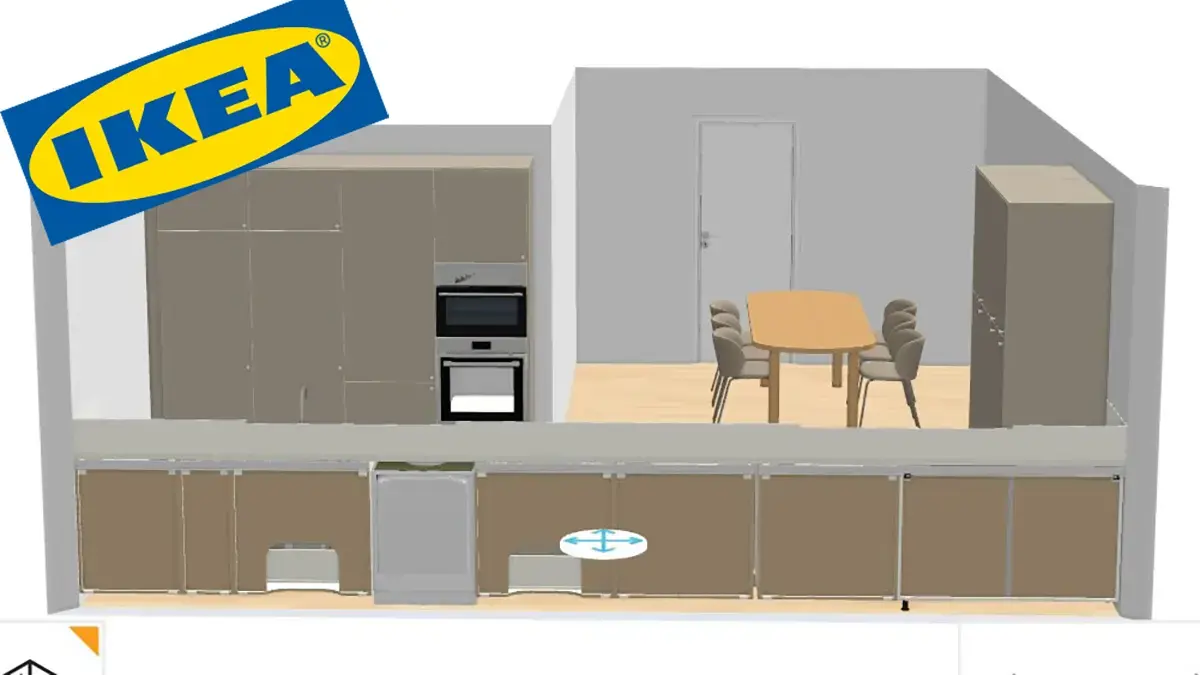
Achieving a high-end, custom architectural look with an IKEA SEKTION cabinetry system does not happen during assembly—it happens during site preparation. Because modern European-style kitchens utilize a hanging suspension rail system, they rely heavily on a perfect horizontal datum. If your site profiles are out of alignment, minor errors will accumulate across your layout, resulting in uneven countertop gaps, binding drawer runners, and misaligned doors.
Before your installation crew arrives or you unbox a single cabinet component, this comprehensive technical framework must be executed to ensure a flawless, millimeter-precise delivery.
1. Environmental & Surface Readiness (The Pre-Installation Audit)
The structural “shell” of your kitchen must be vetted for alignment variances. Standard residential drywall tolerances are rarely flat enough for a direct flush fitment, meaning structural walls must be audited before anchors are driven.
Wall Squareness (The 90° Corner Check)
Check every single corner intersection with a precise squaring tool or a 3-4-5 triangle calculation. Corners must be exactly 90 degrees. Out-of-square configurations will force your cabinet rows out of alignment, creating widening gaps at the back of your countertops. If a corner is out of square, custom filler pieces must be scribed directly to the wall profile later to mask the deviation.
Wall Plumb and Internal Bowing
Run a long, machined straight-edge or a continuous crosshair laser across your wall studs. If walls bow inward or lean out-of-plumb by more than 2mm over an 8-foot span, the galvanized steel suspension rail will warp when tightened down. Shims must be structurally placed behind the rail at stud locations to preserve a perfectly straight plane.
2. Mechanical & Sub-Trade Compliance Standards
Cabinet boxes cannot be safely permanently positioned until the rough-in dimensions for electrical, plumbing, and ventilation lines are strictly verified against your technical kitchen planner design drawings.
Plumbing Footprint Alignment
Supply lines, shut-off valves, and drain traps must sit completely within the footprint of your designated sink base cabinet (typically a 24-inch or 36-inch box). Misaligned pipes that clash with cabinet dividers or drawer boxes will force messy on-site structural cutouts that compromise the loading integrity of the cabinet carcass.
Electrical Clearances & Lighting Paths
Ensure all GFCI countertop backsplash outlets clear the standard countertop line and sit comfortably between the planned cabinet locations. If your layout integrates low-voltage under-cabinet LED channels, wire routing paths must be planned and pre-drilled into the frames prior to mounting them to the wall.
Ventilation Centerlines
Mark the precise centerline for your extractor hood. Ensure you maintain a minimum vertical clearance of 24 inches above electric cooktops or 30 inches above gas ranges to fully comply with local Ontario structural safety codes and manufacturer warranties.
3. Deciphering the Floor Datum: The Critical 82cm Rule
Never assume your kitchen subfloor or finished tile is perfectly level. To prevent severe installation alignment failures, you must locate the absolute highest point of your floor across the entire layout path using a self-leveling rotary laser tool.
IKEA SEKTION base cabinets require the bottom edge of the suspension rail to be fixed exactly 820mm (32 3/16 inches) from the highest point of your floor.
The Precision Formula: > Rail Mounting Height = Highest Floor Point + 820mm
By matching your rail to the highest physical spot on the floor, you guarantee that if the floor slopes downward anywhere else, your adjustable plastic cabinet legs can extend outward to easily compensate. If you mistakenly calculate from a lower spot instead, the cabinets hitting the high spot will sit too low, leaving zero clearance to fit the standard toe-kicks without cutting awkwardly into the structural cabinet base.
4. Structural Wall Reinforcement Requirements
Standard 1/2-inch drywall alone cannot support the immense shear weight of a fully loaded wall cabinet pantry, heavy dishware collections, or floating architectural configurations.
Wood Blocking vs. Stud Tracking
If your wall studs do not perfectly line up with the pre-drilled hanging points on the IKEA steel suspension rail—which is highly common in corner configurations or custom layouts—structural intervention is required. Horizontal 2×4 blocking should ideally be installed between the studs behind the drywall during the framing stage.
Fastener Standards
If the drywall is already finished and sealed, heavy-duty structural fasteners—such as GRK cabinet screws or rugged structural washers—must be driven directly into every single available wall stud along the rail’s path. Toggle bolts or drywall anchors should never be used under any circumstances for structural cabinet loads.
5. Active On-Site Property Protection Protocols
A professional cabinet installation layout should never jeopardize the rest of your home renovation assets or finished surfaces. Before tool operations begin, ensure the following workspace safety and containment protocols are executed:
-
Floor Armoring: High-traffic pathways from the unloading zone to the assembly station must be heavily layered with durable floor runners or RamBoard to absorb accidental impact from heavy tool boxes and cabinet frames.
-
Active Dust Extraction: Cutting fillers, deco strips, and custom cover panels requires extensive miter saw modifications. Technicians should utilize active HEPA dust extraction vacuums hooked directly to their cutting tools to keep fine airborne particulate matter out of your home’s main ventilation network.
-
Inventory Staging Zones: Dedicate a clear, clean space outside the main installation work zone specifically for unboxing and sorting. Grouping components by their cabinet ID numbers prevents box damage and accelerates assembly tracking efficiency.
The Value of Professional Execution
By methodically addressing these mechanical and environmental site variables before cabinet assembly begins, you eliminate unexpected layout adjustments, protect your product warranty, and ensure your lines are square, plumb, and permanently level.
If you have a design layout ready and want to ensure a millimeter-accurate execution for your home or project showroom, submit your planner packages to our estimating desk for a transparent, itemized installation quote.